




The Complete AI Marketing Checklist for Business Owners
Artificial intelligence is no longer limited to large companies with dedicated technology teams. Today, business owners can use AI to improve marketing planning, create content faster, understand customers better, automate repetitive tasks, and make more informed decisions.
However, using AI without a clear plan can create inconsistent messaging, inaccurate content, privacy concerns, and wasted time. The most effective approach is to treat AI as a support tool that strengthens your marketing strategy rather than replacing it.
This AI marketing checklist will help business owners identify where AI can add value, choose the right tools, and build a practical process for using AI responsibly.
What Is AI Marketing?
AI marketing is the use of artificial intelligence tools to support, automate, or improve marketing activities. These tools can help with content writing, keyword research, customer segmentation, email campaigns, social media scheduling, reporting, chat support, and more.
For business owners, the goal is not to automate every marketing task. The goal is to use AI where it saves time, improves consistency, or reveals useful insights that would otherwise take longer to find.
1. Define Your Marketing Goals Before Using AI
Before selecting any AI marketing tools, decide what you want to improve. AI works best when it is connected to a clear business objective.
Use this checklist:
- Identify your primary marketing goal, such as more website traffic, leads, sales, bookings, or repeat customers.
- Define the audience you want to reach.
- Review your current marketing channels, including your website, SEO, social media, email marketing, paid ads, and local listings.
- Identify time-consuming tasks that could be streamlined with AI.
- Set measurable goals, such as increasing organic traffic, improving conversion rates, or reducing content-production time.
For example, a local service business may use AI to create location-based blog outlines, draft customer email campaigns, and improve responses to frequently asked questions. An ecommerce business may use AI to write product descriptions, group customers by behavior, and create personalized email recommendations.
2. Audit Your Existing Marketing Assets
AI can only produce useful results when it has accurate information to work with. Before using AI for content or automation, review the marketing assets you already have.
Check the following:
- Website pages and service descriptions
- Brand guidelines and tone of voice
- Existing blog posts and landing pages
- Customer reviews and testimonials
- Email templates
- Social media content
- Product information
- Frequently asked customer questions
- Keyword research and SEO data
- Competitor research
Create a central document that includes your business overview, services or products, target audience, key selling points, preferred tone, and approved brand messaging. This gives your team a reliable reference when using AI tools.
3. Build a Clear Brand Voice Guide
AI-generated content should still sound like your business. Without a brand voice guide, content can become generic, repetitive, or inconsistent across channels.
Your brand voice guide should include:
- Your preferred tone, such as professional, friendly, educational, direct, or conversational
- Words and phrases you regularly use
- Terms you want to avoid
- Your core values and messaging
- Examples of strong website copy, social posts, and emails
- Your audience’s main concerns and questions
- Any compliance requirements for your industry
When using AI, provide this information in your prompt. Instead of asking an AI tool to “write a blog about digital marketing,” ask it to write for your specific audience, use your brand tone, and address a defined customer problem.
4. Use AI for Keyword Research and SEO Planning
AI can make SEO research faster by helping you organize ideas, identify search intent, and create content outlines. However, keyword data should still be verified using SEO tools such as Google Search Console, Ahrefs, Semrush, or Google Keyword Planner.
Use AI to help with:
- Generating seed keyword ideas
- Grouping keywords into topic clusters
- Identifying informational, commercial, and transactional search intent
- Creating blog topic ideas
- Developing content calendars
- Finding related questions for FAQ sections
- Creating SEO content briefs
- Suggesting internal-linking opportunities
- Improving title tags and meta descriptions
Avoid publishing AI-generated keyword recommendations without checking search volume, keyword difficulty, relevance, and competitor results. A keyword may sound relevant but may not attract the right audience or lead to conversions.
5. Create Better Content With AI Support
AI can speed up content creation, but it should not replace subject-matter expertise. Use it to create first drafts, outlines, summaries, repurpose existing content, and improve readability.
Your AI content checklist should include:
- Start with a keyword-focused content brief.
- Define the search intent before writing.
- Use AI to create a detailed outline.
- Add original expertise, examples, opinions, data, and customer insights.
- Fact-check all claims before publishing.
- Check that the content matches your brand voice.
- Add clear calls to action.
- Include internal links to relevant service, product, or contact pages.
- Optimize headings, images, alt text, title tags, and meta descriptions.
- Review the article for repetition, generic language, and inaccurate information.
The best AI-assisted content is not content that sounds automated. It is content that answers the reader’s question clearly and offers useful, trustworthy information.
6. Improve Social Media Marketing With AI
Business owners can use AI to reduce the time required to plan and create social media content. It can help turn one blog post, product page, customer review, or video into multiple social media posts.
Use AI to:
- Create monthly social media content calendars
- Generate post ideas for different platforms
- Write caption variations
- Create short video scripts
- Repurpose blog content into carousels, posts, and stories
- Suggest hashtags and topic angles
- Draft replies to common customer questions
- Analyze engagement patterns and content performance
Always review social posts before publishing. AI may produce captions that are too generic, use irrelevant hashtags, or make claims that do not fit your business.
7. Use AI to Strengthen Email Marketing
AI can help business owners create more targeted and relevant email campaigns. Instead of sending the same message to every customer, AI-supported tools can help segment audiences based on behavior, interests, purchase history, or engagement.
Use AI for:
- Writing email subject line variations
- Creating welcome email sequences
- Drafting abandoned-cart emails
- Personalizing product or service recommendations
- Segmenting customer lists
- Creating re-engagement campaigns
- Summarizing campaign performance
- Testing different email messages and calls to action
Keep customer privacy in mind. Only use customer data in ways that are transparent, secure, and compliant with relevant privacy requirements.
8. Automate Repetitive Marketing Tasks
Automation can help small businesses save time, but it should be used carefully. Automate repetitive processes while keeping human involvement in areas that require judgment, empathy, or approval.
Tasks that may be suitable for automation include:
- Lead capture and initial follow-up emails
- Appointment reminders
- Customer review requests
- Social media scheduling
- Basic customer-service responses
- Lead scoring
- Weekly performance reports
- Content repurposing workflows
- CRM updates
Before automating a workflow, map out the customer journey. Make sure customers can easily contact a real person when they need help.
9. Improve Customer Support With AI Chat Tools
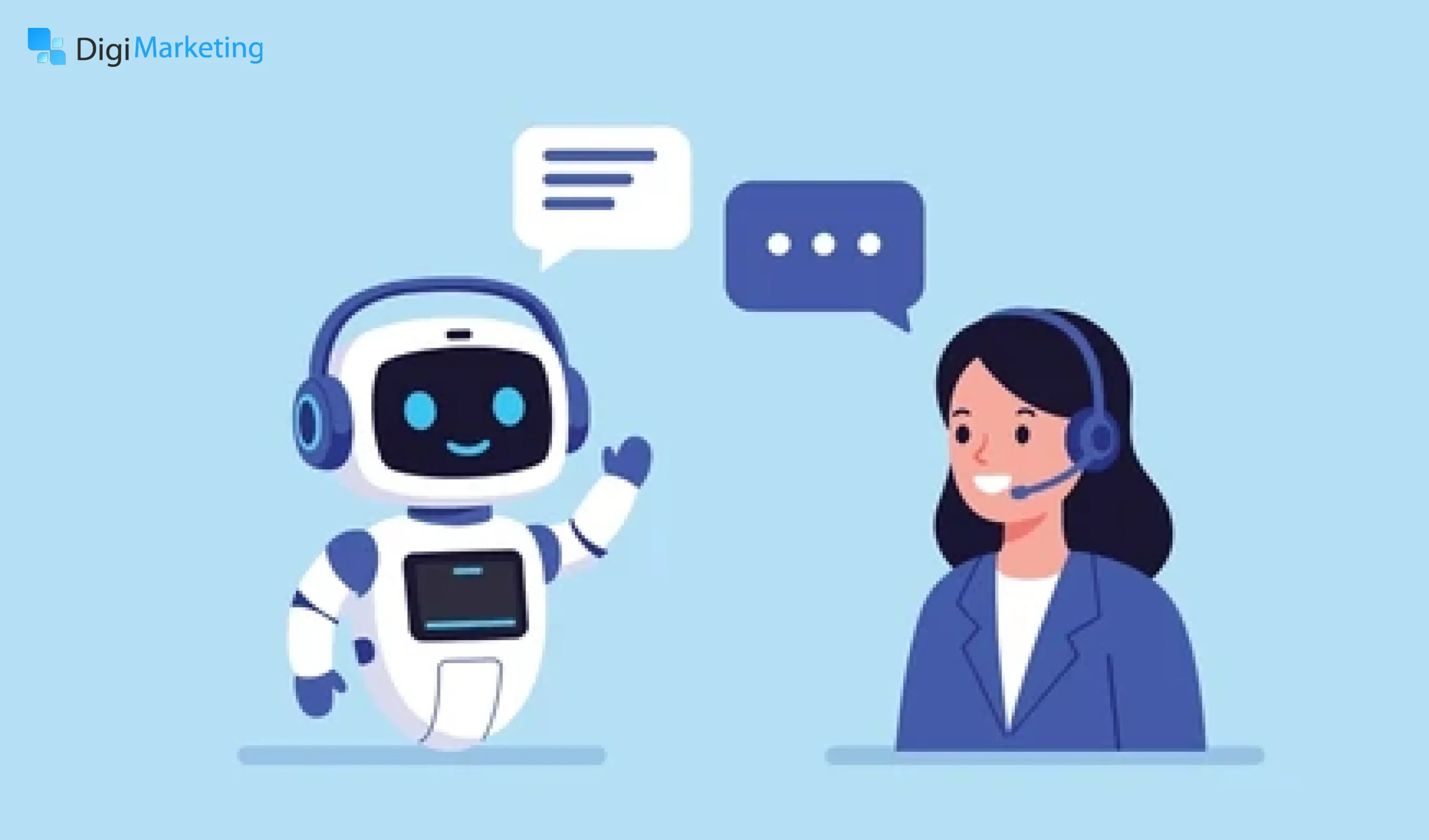
AI chat tools can help answer common questions outside business hours, guide visitors to relevant pages, and collect lead information. They can be useful for businesses that receive repetitive questions about pricing, services, locations, bookings, shipping, or policies.
Before launching an AI chatbot, check that it can
- Answer only approved questions
- Link users to relevant pages
- Collect leads securely
- Transfer complex issues to a human team member
- Avoid making promises or giving advice outside its approved scope
- Clearly explain when customers are interacting with an automated assistant
Review chatbot conversations regularly to identify customer questions that should be added to your website, FAQs, service pages, or email campaigns.
10. Use AI for Marketing Analytics and Reporting
AI can help business owners understand marketing data without spending hours reviewing spreadsheets. It can summarize performance trends, highlight changes, and identify possible opportunities.
Use AI to analyze:
- Website traffic trends
- Organic keyword performance
- Conversion rates
- Lead sources
- Email open and click rates
- Social media engagement
- Paid advertising performance
- Customer acquisition cost
- Customer lifetime value
AI-generated reports should be treated as a starting point. Verify the numbers in your analytics platform and use human judgment to decide what actions to take.
11. Protect Your Business From AI Risks
AI marketing can create risks if it is used without review. Business owners should have a simple approval process for AI-generated content, customer communications, and automated workflows.
Use this AI risk checklist:
- Fact-check all content before publishing.
- Do not share confidential customer or business information in public AI tools.
- Review legal, financial, medical, or regulated-industry content carefully.
- Check for plagiarism and duplicate content.
- Confirm that images, claims, and statistics are accurate.
- Keep human approval for customer-facing content.
- Monitor automated campaigns and chatbot conversations.
- Use secure tools that align with your privacy requirements.
- Document which AI tools your team uses and what data they can access.
12. Train Your Team to Use AI Effectively
AI tools are most useful when team members understand how to use them. Provide clear guidance on approved tools, acceptable use cases, brand voice, data privacy, and review processes.
Your team training should cover:
- How to write clear prompts
- How to provide business context to AI tools
- How to verify AI-generated information
- How to edit content for your brand voice
- Which data should never be entered into AI tools
- When a human review is required
- How to report inaccurate or risky AI output
A simple internal AI policy can prevent mistakes and help your team use AI consistently.
13. Measure Results and Improve Your AI Marketing Process
AI marketing should be reviewed like any other business investment. Track whether AI is helping you save time, improve quality, generate leads, or increase revenue.
Review your AI marketing efforts every month and ask:
- Which tasks are taking less time?
- Which channels are producing better results?
- Is AI-generated content ranking or converting?
- Are customers responding positively to automated communication?
- Are there quality or accuracy issues?
- Are you paying for tools your team does not use?
- What should be improved, automated, or reviewed more carefully?
Keep the tools and workflows that create measurable value. Remove the ones that add complexity without improving results.
Final AI Marketing Checklist for Business Owners
Before implementing AI in your marketing, make sure you can answer yes to the following:
- Do you have clear marketing goals?
- Do you understand your target audience?
- Do you have updated brand guidelines?
- Have you reviewed your existing website and marketing assets?
- Are you using verified SEO and customer data?
- Is every AI-generated piece of content reviewed before publishing?
- Are customer data and privacy protected?
- Do you have human oversight for automated workflows?
- Are you tracking results and return on investment?
- Is your team trained on safe and effective AI use?
Conclusion
AI can help business owners market more efficiently, but it is not a replacement for strategy, customer understanding, or professional judgment. The strongest results come from combining AI tools with a clear marketing plan, accurate data, original expertise, and human review.
Start with one or two high-impact areas, such as content planning, email marketing, customer support, or reporting. Track the results, improve your process, and expand your AI marketing efforts as your business becomes more confident using the technology.
 Schedule a Call Today