




Custom e-commerce website development helps Singapore businesses create online stores tailored to their products, customers, and operational needs. From customised shopping experiences to payment integrations and inventory management, a bespoke e-commerce website can support business growth and digital transformation.
However, custom website development can involve significant costs. Singapore small and medium-sized enterprises (SMEs) may therefore want to know whether the EDGE Grant can help fund their e-commerce projects.
The answer depends on the specific grant activity, the proposed solution, and the applicable eligibility requirements. A custom-built e-commerce website is not automatically eligible for EDGE Grant support simply because it enables online sales.
In this guide, we explain how the EDGE Grant applies to custom e-commerce website development, which costs businesses should verify, how to assess project eligibility, and what to do before engaging a developer.
What Is the EDGE Grant for Singapore Businesses?
The EDGE Grant is a Singapore government business support framework launched on 30 September 2026. It consolidates support previously provided through the Enterprise Development Grant (EDG), Market Readiness Assistance (MRA) Grant, and Productivity Solutions Grant (PSG).
The grant supports eligible business activities designed to help companies strengthen their capabilities, improve productivity, adopt digital solutions, and pursue growth opportunities.
For businesses planning an online store, one relevant activity is E-Commerce – Online Shop (B2C). This activity supports the establishment of e-commerce platforms with integrated secure payment processing, enabling businesses to sell products and services directly to consumers.
However, each EDGE Grant activity has its own supported costs, eligibility conditions, and expected deliverables. Businesses must identify the activity that matches their project rather than assuming all digital development work qualifies.
Official reference: Enterprise Singapore — E-Commerce: Online Shop (B2C).
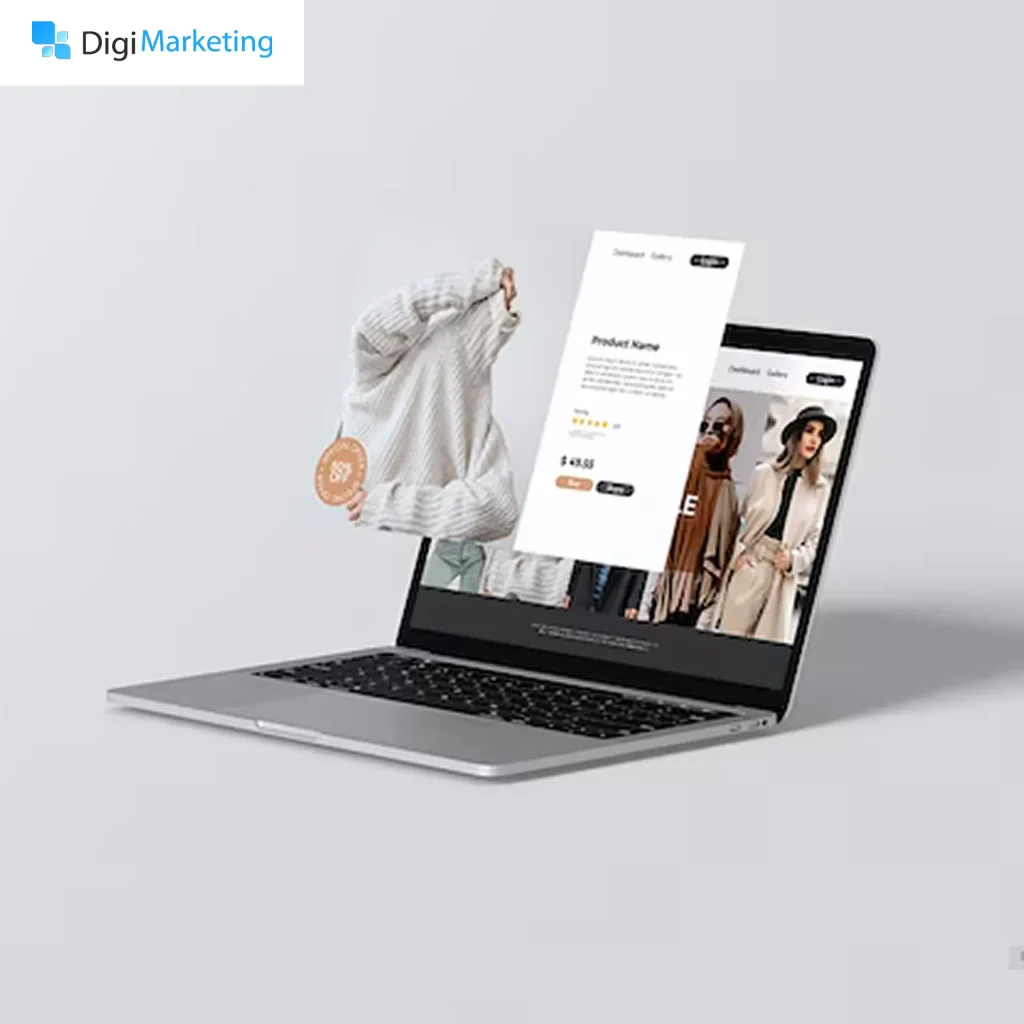
What Is Custom E-Commerce Website Development?
Custom e-commerce website development involves designing and building an online store around a business’s specific requirements. Unlike a standard website package, a custom project may involve tailored functionality, specialised integrations, and unique user experiences.
Depending on the project scope, custom e-commerce development may include:
- Custom website design and user interface development
- Product catalogues and product filtering
- Shopping cart and checkout functionality
- Secure payment gateway integration
- Inventory and order management
- Shipping and fulfilment integrations
- Customer account functionality
- Integration with enterprise resource planning (ERP) or customer relationship management (CRM) systems
- Custom reporting and business workflows
For example, a Singapore retailer may need an online store that connects product inventory with its physical outlets. A wholesale business may require customer-specific pricing, bulk ordering, and integration with its existing business systems.
These requirements can make a custom solution useful for the business. However, the technical complexity of a project does not itself establish grant eligibility.
Can the EDGE Grant Cover Custom E-Commerce Website Development?
A custom e-commerce website may serve a business purpose that aligns with the EDGE Grant’s digitalisation objectives, but the eligibility of a bespoke development project must be confirmed under the specific activity being considered.
The E-Commerce – Online Shop (B2C) activity directs businesses to identify suitable pre-approved vendors and solutions through the IMDA SMEs Go Digital programme.
This is an important distinction for businesses planning a fully customised website. A developer’s ability to build an online store does not automatically mean the developer or the proposed project qualifies for the grant.
Before proceeding, determine whether your project can be delivered through a suitable eligible solution package or whether another activity is more appropriate.
1. Customising an Existing E-Commerce Platform
Some businesses use platforms such as Shopify or WooCommerce and require additional design, functionality, or integrations.
These projects may include theme customisation, checkout changes, product filtering, or connections to other business systems.
The platform alone does not determine eligibility. Check whether the proposed work and its costs are included in a supported solution under the relevant activity.
2. Building a Bespoke E-Commerce Website From Scratch
A fully custom website may involve a unique technology stack, bespoke backend development, and functionality built specifically for the business.
Do not assume that this type of project qualifies under the E-Commerce – Online Shop (B2C) activity.
Confirm the applicable vendor, solution, and cost requirements before treating the development budget as grant-eligible.
If the project involves substantial technological innovation rather than a standard online shop implementation, review the other EDGE Grant activities as well. For example, the Product Development activity has its own scope and eligibility requirements; routine website development should not automatically be classified as technological innovation.
3. Integrating E-Commerce With ERP or CRM Systems
A business may need its online store to exchange information with inventory systems, accounting software, customer databases, or order management tools.
These integrations can help reduce manual work and improve operational visibility. However, the grant treatment depends on the nature of the project and the relevant activity.
Check whether the proposed scope falls under an eligible online shop solution, an integrated enterprise system, or another supported activity.
Avoid assuming that every integration or software development cost qualifies.

Which Custom E-Commerce Development Costs May Be Eligible?
The E-Commerce – Online Shop (B2C) activity lists software costs, capped at 12 months, as supported costs. GST and maintenance costs are listed as non-supported.
A custom development quotation may include several different cost categories, so businesses should review each item separately.
|
Cost category |
What to verify |
|
E-commerce software |
Whether the selected software and subscription period qualify |
|
Website implementation |
Whether the vendor and solution package are eligible |
|
Custom design and user interface |
Whether the work is included in the supported package |
|
Payment integration |
Whether the implementation meets the activity requirements |
|
Plugins and extensions |
Whether the specific software costs qualify |
|
ERP or CRM integration |
Whether the integration falls within the approved project scope |
|
Hosting and recurring services |
Whether the particular costs are supported |
|
Website maintenance |
Maintenance costs are non-supported under the online shop activity |
|
GST |
GST is non-supported under the online shop activity |
This table is a guide for reviewing a quotation, not a guarantee that individual expenses qualify. Obtain confirmation from the relevant vendor and check the official activity requirements before applying.
How Much EDGE Grant Funding Is Available for an E-Commerce Project?
For the E-Commerce – Online Shop (B2C) activity, the published funding limits are:
|
Business type |
Maximum support |
Activity cost cap |
|
Eligible SMEs |
Up to 50%, capped at S$2,500 |
S$5,000 |
|
Eligible non-SMEs |
Up to 30%, capped at S$1,500 |
S$5,000 |
These limits apply to this specific activity. They should not be interpreted as a general funding rate for all custom e-commerce development projects.
Example: Calculating Potential Support
Suppose an eligible SME has a qualifying online shop solution with S$4,000 in approved eligible costs.
If all S$4,000 qualifies for support at 50%, the illustrative grant amount would be S$2,000.
If the eligible costs were S$5,000, 50% would equal S$2,500, reaching the maximum support amount for an SME under this activity.
Actual support depends on the selected solution, eligible expenses, the business’s eligibility, and Enterprise Singapore’s assessment. A custom website quotation may exceed the activity’s cost cap or include costs that are not supported.
How to Check Whether Your Custom E-Commerce Project Is Eligible
Before engaging a developer, use the following process to assess your project.
Step 1: Define Your Business Requirements
Document the functions your online store needs. These might include online payments, product management, customer accounts, inventory synchronisation, order processing, or integrations with existing systems.
A clear project scope helps you compare solutions and identify the appropriate grant activity.
Step 2: Review the Relevant EDGE Grant Activity
Visit Enterprise Singapore’s official EDGE Grant website and review the E-Commerce – Online Shop (B2C) activity.
Check the eligibility conditions, supported costs, funding limits, application documents, and required deliverables.
If your project involves extensive integration or technological innovation, investigate whether another activity is more appropriate. Do not select an activity solely because it appears to offer funding.
Step 3: Check Available Pre-Approved Solutions
Use the IMDA SMEs Go Digital platform to explore suitable digital solutions and vendors.
Ask whether an available solution can meet your business requirements. If you need custom features, confirm whether they can be included within the eligible solution package.
Do not assume that a web development agency is an eligible vendor simply because it has experience building e-commerce websites.
Step 4: Obtain a Detailed Quotation
Ask the vendor to itemise the proposed solution, software costs, implementation services, and any additional development work.
For the online shop activity, applicants must also prepare a projection of expected cost savings for one year after project completion.
A detailed quotation makes it easier to identify costs that need further eligibility confirmation.
Step 5: Submit Your Application Before Committing to the Project
Submit your application through the Business Grants Portal using authorised company access and the application route specified on the relevant activity page.
For the online shop activity, the business must not have started work or made a payment or deposit to a supplier, vendor, or third party before application submission. Retrospective applications are not supported.
Do not assume that submitting an application guarantees approval. If you commit to the project after submission but before approval, you bear the risk that funding may not be awarded.
Step 6: Follow the Approved Scope and Claim Requirements
If the application is approved, review the Letter of Offer and its conditions before proceeding.
Complete the project within the applicable qualifying period, retain invoices and payment records, and prepare the required deliverables.
The online shop activity requires project completion within 18 months of approval. The listed deliverables include a photo showing the deployed software and its unique identifier.
The grant is reimbursement-based. Expenses must be paid in full before claim submission, and disbursement follows claim approval.
EDGE Grant Eligibility Requirements for Singapore SMEs
For the E-Commerce – Online Shop (B2C) activity, the published requirements include:
WooCommerce vs Shopify: Does the Platform Affect Grant Eligibility?
WooCommerce and Shopify are two different ways to build and manage an online store.
- Business registration: The company must be registered and operating in Singapore.
- Local ownership: At least 30% direct or indirect ownership by Singapore citizens and/or Singapore Permanent Residents, based on ultimate individual ownership.
- No prior project commitment: Work must not have started, and no payment or deposit must have been made to a supplier, vendor, or third party before application submission.
- Singapore implementation: The digital solution must be used or implemented in Singapore.
Additional activity-specific requirements may apply.
Meeting the general eligibility conditions does not guarantee that a particular custom development project will qualify. Businesses should confirm both company eligibility and project eligibility before committing funds.
Custom E-Commerce Website Development vs Pre-Approved Solutions
Understanding the difference between a custom project and a pre-approved solution can help businesses plan their budgets.
|
Consideration |
Custom development |
Pre-approved solution |
|
Functionality |
Can be tailored to specific requirements |
Depends on the solution’s available features and configuration |
|
Implementation |
Scope varies by project |
Follows the selected solution and package |
|
Cost structure |
May include extensive bespoke development |
Usually follows the vendor’s specified package and quotation |
|
Grant eligibility |
Must be verified for the specific activity and project |
May be eligible if all grant conditions are met |
|
Flexibility |
Depends on the development approach |
Depends on the solution’s supported customisation |
Neither approach should be selected based on an assumption that grant support is guaranteed. The business should compare its actual needs, implementation costs, and applicable grant requirements.
Common Mistakes to Avoid
Singapore SMEs planning custom e-commerce development should avoid the following mistakes.
Assuming all website development is eligible. A project must fit a supported activity and satisfy its specific requirements.
Choosing a developer before checking eligibility. Verify the relevant vendor and solution process before making a commitment.
Starting work too early. The online shop activity does not support retrospective applications.
Including unsupported costs in the budget. Maintenance and GST are listed as non-supported costs under the online shop activity.
Treating a complex website as technological innovation automatically. Bespoke functionality alone does not establish eligibility under a product development or innovation activity.
Assuming grant approval is guaranteed. Enterprise Singapore assesses applications according to the relevant activity and its conditions.
How DST Advertising Can Help With Your E-Commerce Project
DST Advertising helps businesses plan digital projects around their commercial goals. Depending on the project, services may include e-commerce website development, website design, digital solution planning, and business automation.
For businesses considering a custom online store, defining the required functionality, integrations, and implementation scope can help clarify the development budget and business objectives.
If you intend to apply for the EDGE Grant, confirm the relevant activity, vendor, solution, and cost requirements before committing to development. Do not assume that a particular service or project qualifies unless the official conditions have been verified.
Grant eligibility and approval remain subject to Enterprise Singapore’s requirements and assessment.
Frequently Asked Questions
Can the EDGE Grant cover a fully custom e-commerce website?
Eligibility is not automatic. The business must identify a suitable EDGE Grant activity and confirm whether its custom development scope, vendor, solution, and costs meet the applicable requirements.
Can I use my preferred web development agency?
Do not assume that every web development agency qualifies under the online shop activity. Check the relevant vendor and solution requirements through the official grant and IMDA SMEs Go Digital resources.
Are custom payment gateway integrations eligible?
Secure payment processing is part of the online shop activity’s purpose. However, the eligibility of a particular integration and its implementation costs must be confirmed under the selected solution package.
Can the EDGE Grant cover website maintenance?
Maintenance costs are listed as non-supported under the E-Commerce – Online Shop (B2C) activity.
How much funding can an SME receive for an online shop?
Eligible SMEs may receive up to 50% support, capped at S$2,500, under the E-Commerce – Online Shop (B2C) activity. The activity cost cap is S$5,000. These figures do not guarantee funding for a custom development project.
Can I apply after the developer has started work?
No. The online shop activity does not support retrospective applications. Work must not have started, and no payment or deposit must have been made to a supplier, vendor, or third party before application submission.
What if my custom project does not fit the online shop activity?
Review the other EDGE Grant activities to determine whether a different activity matches the project’s actual scope. If you cannot identify a suitable activity, Enterprise Singapore’s EDGE Grant FAQs recommend approaching an SME Centre for business advice and guidance on other relevant government support schemes.
Conclusion
Custom e-commerce website development can help Singapore businesses create online shopping experiences that match their products, customers, and operational requirements. However, a bespoke website project is not automatically eligible for the EDGE Grant.
Before investing in development, define your project scope, review the relevant grant activity, check available solutions and vendor requirements, and confirm which costs may qualify.
Taking these steps before committing to a developer can help your business make a more informed decision about its e-commerce investment and potential funding options.
For the latest eligibility conditions, consult Enterprise Singapore’s E-Commerce – Online Shop (B2C) activity page.
 Schedule a Call Today