




React.js SEO: Best Practices for Higher Google Rankings in 2026
Introduction
Search Engine Optimization (SEO) remains one of the most effective digital marketing strategies for driving organic traffic, generating leads, and increasing online visibility. As businesses increasingly adopt modern JavaScript frameworks to build interactive web applications, ensuring these websites are optimized for search engines has become a top priority.
React.js is one of the most popular front-end libraries for creating dynamic and engaging user experiences. However, because React applications often rely on client-side rendering, SEO can be challenging if not implemented correctly.
The good news is that modern React development practices and advancements in search engine crawling have made it easier than ever to build SEO-friendly React applications. By following the right strategies, businesses can enjoy both a high-performing user experience and strong search engine rankings.
In this guide, we’ll explore the most effective React.js SEO best practices for achieving higher Google rankings in 2026.
Why SEO Matters for React.js Websites
SEO directly impacts:
- Organic website traffic
- Brand visibility
- Lead generation
- Conversion rates
- Customer acquisition costs
A well-optimized React website can attract qualified visitors from search engines while providing a fast and engaging user experience.
Without proper implementation, however, search engines may struggle to understand or index important content, limiting your website’s ranking potential.
Understanding React.js SEO Challenges
Traditional React applications often use Client-Side Rendering (CSR).
In CSR:
1. The browser loads a minimal HTML file.
2. JavaScript downloads and executes.
3. Content is rendered dynamically.
While this creates highly interactive experiences, it can introduce challenges such as:
Common React SEO Issues
- Delayed content rendering
- Poor indexing of dynamic content
- Missing metadata
- Slower initial page loads
- Core Web Vitals concerns
Although Google has improved its ability to process JavaScript, optimizing React applications remains essential for maximum search visibility.
1. Use Server-Side Rendering (SSR) Whenever Possible
Server-Side Rendering generates page content on the server before it reaches the browser.
Benefits include:
- Faster content delivery
- Improved indexing
- Better user experience
- Enhanced Core Web Vitals
For React projects, frameworks such as Next.js make SSR implementation significantly easier.
SEO Advantages
- Search engines receive fully rendered HTML
- Faster page indexing
- Improved crawl efficiency
- Better ranking potential
SSR remains one of the most effective SEO strategies for React-based websites in 2026.
2. Implement Static Site Generation (SSG)
Static Site Generation pre-renders pages during the build process.
This approach is ideal for:
- Blog articles
- Service pages
- Landing pages
- Documentation sites
- Marketing websites
Benefits
- Extremely fast load times
- Enhanced SEO performance
- Lower server requirements
- Better user experience
Many businesses combine SSG with React frameworks to maximize search visibility.
3. Optimize Core Web Vitals
Google continues to use Core Web Vitals as important ranking signals.
Key metrics include:
Largest Contentful Paint (LCP)
Measures loading performance.
Target:
- Under 2.5 seconds
Interaction to Next Paint (INP)
Measures responsiveness.
Target:
- Under 200 milliseconds
Cumulative Layout Shift (CLS)
Measures visual stability.
Target:
- Less than 0.1
React Optimization Techniques
- Code splitting
- Lazy loading
- Asset compression
- Image optimization
- Efficient component rendering
Improving these metrics can significantly enhance rankings and user satisfaction.
4. Manage Metadata Properly
Metadata helps search engines understand page content.
Every page should include:
Essential Meta Elements
- Title tags
- Meta descriptions
- Canonical URLs
- Open Graph tags
- Twitter Cards
Example:
- Unique page titles
- Keyword-focused descriptions
- Relevant social sharing data
Proper metadata improves both rankings and click-through rates.
5. Create SEO-Friendly URLs
URL structure plays a crucial role in search visibility.
Good Example
yourwebsite.com/react-seo-best-practices
Poor Example
yourwebsite.com/page?id=12345
Best practices include:
- Use descriptive keywords
- Keep URLs short
- Avoid unnecessary parameters
- Maintain a logical hierarchy
Clean URLs improve crawlability and user experience.
6. Generate XML Sitemaps
An XML sitemap helps search engines discover and index important pages.
Your sitemap should:
- Include all indexable pages
- Update automatically
- Exclude duplicate content
- Reflect site structure accurately
Benefits include:
- Faster indexing
- Improved crawl efficiency
- Better visibility for new pages
Sitemaps are particularly valuable for large React websites.
7. Implement Structured Data (Schema Markup)
Structured data helps search engines understand content context.
Common schema types include:
Organization Schema
For company information.
Article Schema
For blog content.
FAQ Schema
For frequently asked questions.
Product Schema
For e-commerce websites.
Local Business Schema
For location-based businesses.
Benefits:
- Rich search results
- Enhanced visibility
- Higher click-through rates
- Better content understanding
Schema markup can provide a competitive SEO advantage
8. Optimize Images for Search Engines
Images contribute significantly to page performance.
Best Practices
- Compress images
- Use modern formats (WebP, AVIF)
- Implement lazy loading
- Define image dimensions
SEO Benefits
- Faster loading times
- Improved accessibility
- Better image search visibility
Optimized images support both rankings and user experience.
9. Implement Internal Linking Strategies
Internal links help search engines understand your website structure.
Benefits include:
- Improved crawlability
- Better page authority distribution
- Increased user engagement
- Enhanced navigation
Internal Linking Tips
- Link related content naturally
- Use descriptive anchor text
- Connect high-authority pages with important content
- Maintain logical site architecture
A strong internal linking strategy strengthens overall SEO performance.
10. Reduce JavaScript Bundle Size
Large JavaScript bundles can negatively impact performance.
Optimization Techniques
- Tree shaking
- Code splitting
- Dynamic imports
- Dependency auditing
- Lazy loading components
Reducing unnecessary JavaScript improves:
- Load times
- User experience
- Core Web Vitals
- Search rankings
Performance optimization remains a major ranking factor in 2026.
11. Optimize for Mobile-First Indexing
Google primarily evaluates websites using their mobile versions.
React websites must deliver:
- Responsive layouts
- Fast mobile loading
- Touch-friendly navigation
- Optimized typography
- Accessible design
Mobile SEO Benefits
- Better rankings
- Improved engagement
- Increased conversions
Mobile optimization is no longer optional it is essential.
12. Improve Website Accessibility
Accessibility supports both user experience and SEO.
Best practices include:
- Semantic HTML
- Proper heading structure
- Keyboard navigation
- ARIA labels where necessary
- Sufficient color contrast
- Accessible forms
Benefits include:
- Better user experience
- Wider audience reach
- Improved search engine understanding
Accessible websites often perform better in organic search.
13. Use Canonical Tags to Prevent Duplicate Content
Duplicate content can dilute search rankings.
Canonical tags help search engines identify the preferred version of a page.
Use canonical tags for:
- Filtered pages
- Similar content variations
- Tracking parameter URLs
- E-commerce product pages
This helps consolidate ranking signals and avoid indexing issues.
14. Monitor SEO Performance Regularly
SEO is an ongoing process.
Businesses should regularly monitor:
- Organic traffic
- Keyword rankings
- Core Web Vitals
- Crawl errors
- Indexed pages
- Backlink profiles
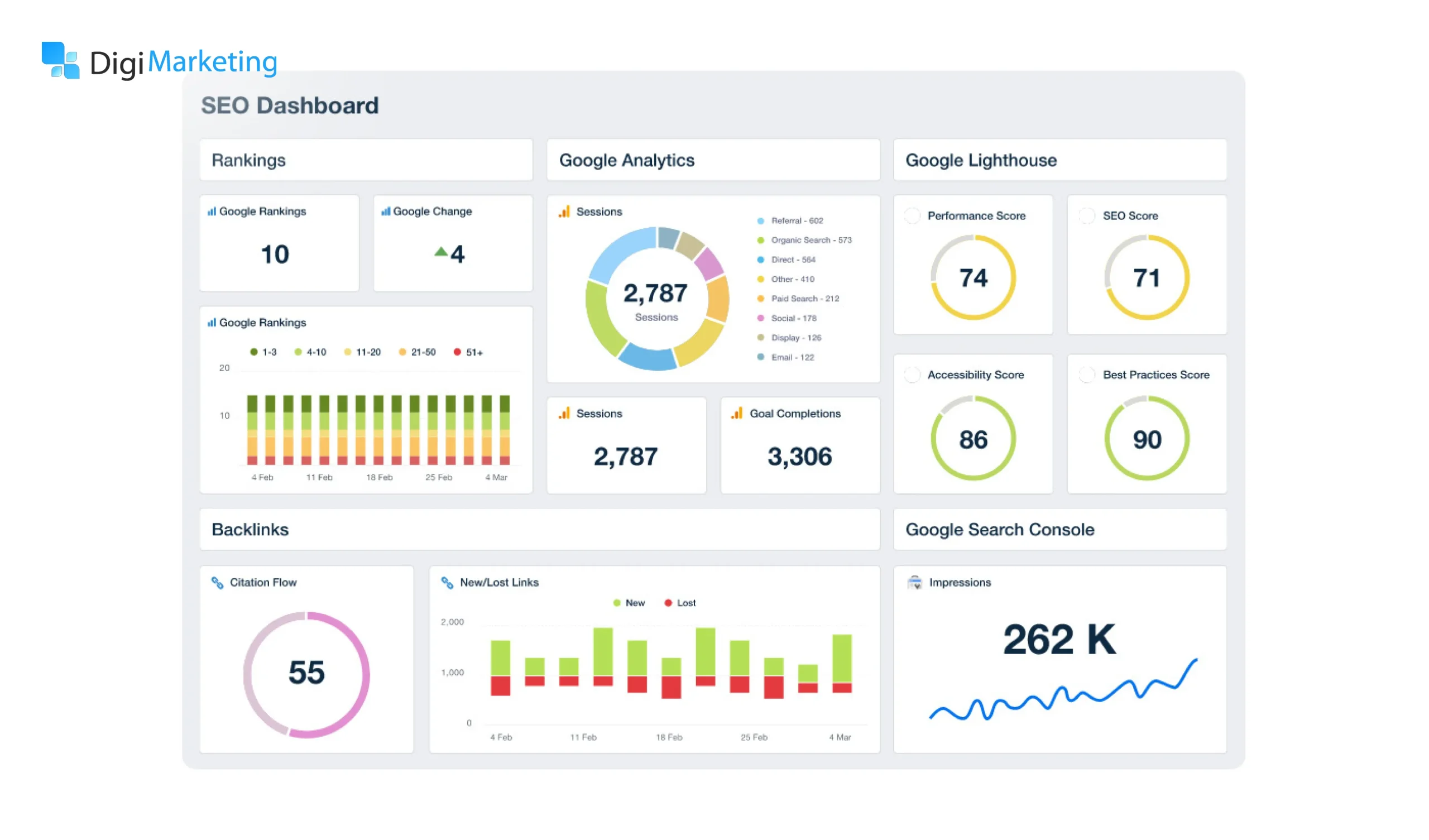
Tools such as Google Search Console and analytics platforms provide valuable insights into performance improvements.
Common React SEO Mistakes to Avoid
Many businesses unknowingly harm their rankings through poor implementation.
Avoid:
- Missing metadata
- Slow page performance
- Excessive JavaScript
- Broken internal links
- Poor mobile optimization
- Duplicate content
- Unoptimized images
- Weak site architecture
Addressing these issues can significantly improve search visibility.
Conclusion
React.js continues to power some of the world’s most successful websites and web applications. However, achieving strong Google rankings requires more than just building a great user interface.
By implementing server-side rendering, optimizing Core Web Vitals, improving metadata, reducing JavaScript bloat, and following modern SEO best practices, businesses can maximize the search visibility of their React applications.
In 2026, the most successful React websites will be those that combine exceptional user experiences with technical SEO excellence. By investing in both performance and optimization, businesses can improve rankings, increase organic traffic, and achieve sustainable online growth.
 Schedule a Call Today